Functional software is not automatically reliable software. A software product may meet all functional requirements and pass the required tests, yet still contain design or implementation choices that expose it to misuse, vulnerabilities, and unexpected outages.
 reliabilitysoftware development
 information securitySecuritysoftwaretesting


Secure by Design means that security is built into the software from the design stage onward and considered throughout its entire lifecycle. In practice, this includes identifying risks and threats, defining security requirements, managing access rights and dependencies, conducting security testing, and continuously monitoring and remediating vulnerabilities. Secure by Design is not just the responsibility of the development team, but an organization-wide approach that guides how security is managed.

Cybersecurity has become one of the most important considerations in products and services that rely on software components. Security must therefore be a critical part of the product development process. Secure by Design means considering security from the outset, when software requirements, architecture, and use cases are being defined. Security is not added at the end of development; it is built into the entire software lifecycle, from design and implementation to maintenance and decommissioning.
When risks are identified early, security requirements are clearly defined, and solutions are designed to remain controlled even in exceptional situations, software is better able to withstand change and disruption. The essence of Secure by Design is not perfection, but proactive and controlled development.
– “Secure software is not based on complete flawlessness, but on proactive design, threat modelling, and effective practices for identifying and remediating vulnerabilities,” states Traficom’s Status of Software Security report.
In practice, Secure by Design means turning security into concrete tasks, clearly defined responsibilities within the organization, and acceptance criteria for the software. Security is not left as a general objective; it is reflected, for example, in identity and access management, logging, software dependency risk management, vulnerability identification and management, and comprehensive testing, including load, regression, and penetration testing.
In identity and access management, developers and users are granted only the permissions they need, and the necessity of those permissions is reviewed regularly. Managing the risks associated with software dependencies is also an important part of an organization’s overall security. Third-party components and libraries used in software should be documented in a machine-readable and reliable format. An SBOM (Software Bill of Materials) provides a comprehensive inventory of the dependencies included in the software.
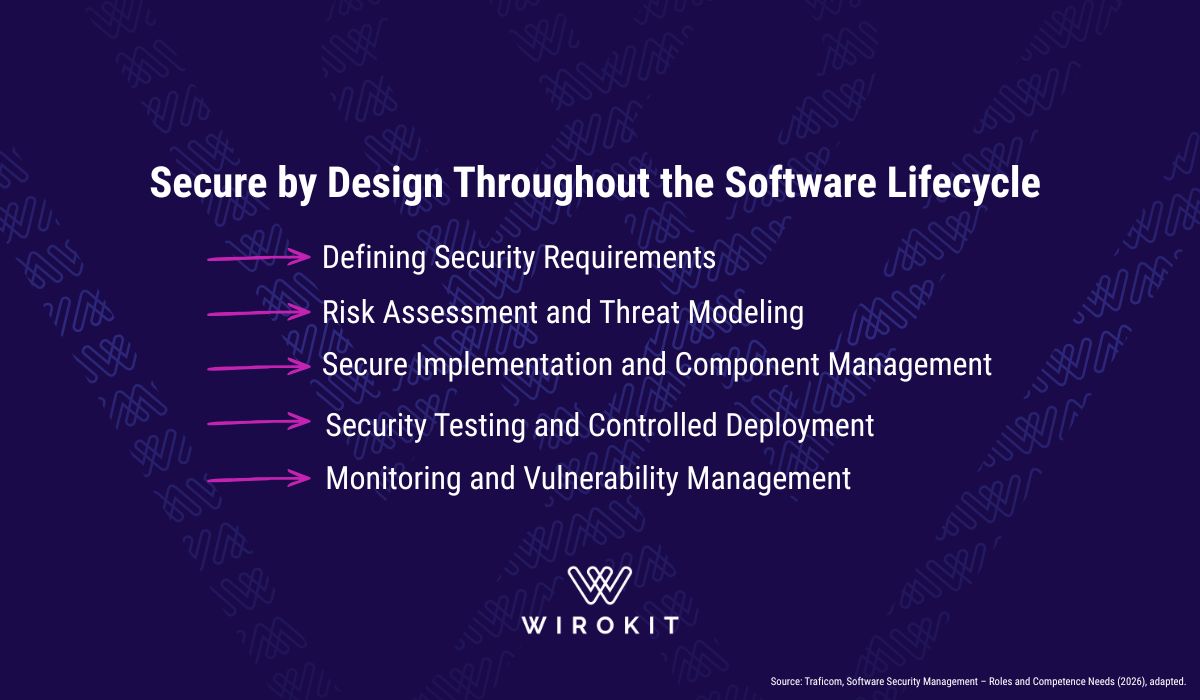
In agile development, security-related tasks can be added to the backlog and handled as part of normal development work. Software should also generate sufficient logs about its use. Automated checks can be integrated into continuous integration pipelines to identify vulnerabilities in code, libraries, and components as early as possible. Testing helps ensure that vulnerabilities introduced through dependencies are identified and remediated before they lead to serious security risks. After release, security work continues through monitoring, software updates, incident management, and the reporting and remediation of vulnerabilities.
Secure by Design therefore does not refer to a single, separate security phase. Instead, security becomes a visible and verifiable part of normal software development and ongoing maintenance. Security-focused practices support the identification of vulnerabilities, their reporting to the relevant authorities, and timely remediation.
Secure by Design is not just a way of working for the development team or a set of technical solutions. It is an organization-wide approach that guides how security is addressed throughout the software lifecycle. Its success depends on the goals, requirements, responsibilities, and ways of working that the organization establishes for each stage of that lifecycle.
Management defines the target level of security and ensures that adequate resources are available. Business teams identify software-related risks and critical needs, procurement takes security requirements and supplier risks into account, developers implement security in practice, and maintenance ensures that security is sustained throughout the software’s operational life. Business leaders, product owners, software development teams, and security professionals also need ongoing dialogue and a shared understanding of the importance of managing security risks.
“Every technology company must take executive-level responsibility for ensuring that its products are secure by design.”
In Traficom’s guide, Software Security Management – Roles and Competence Needs, the responsibility of the entire organization is summarized as follows:
– “Software security is not created by a single expert or team; it is built through the collective efforts of the entire organization.”
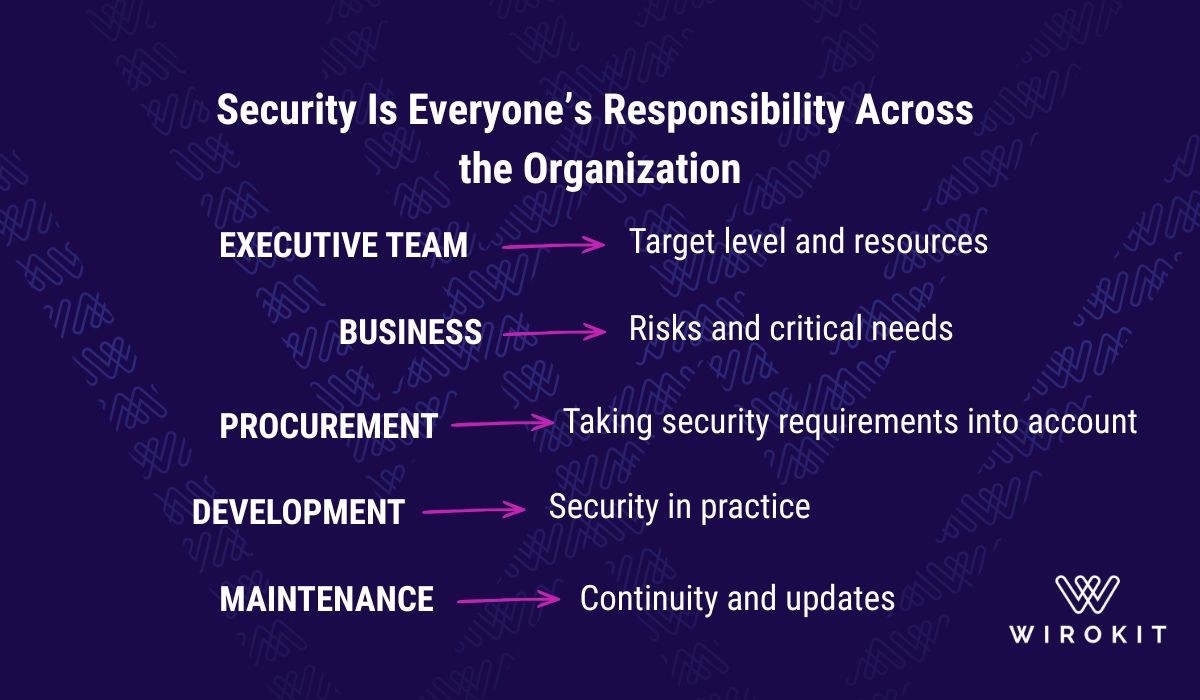
Secure by Design is only truly implemented when security does not depend on the initiative of individual experts, but is reflected in shared goals, decision-making, responsibilities, and everyday ways of working. This requires collaboration between management, business, procurement, legal, security, development, and maintenance. At its best, security is not a separate phase of work, but a natural part of the organization’s culture and the way decisions are made.
Users should always be able to trust the services they rely on. Attacks targeting software supply chains have increased significantly, and organizations need to be able to demonstrate that the software they use follows appropriate security practices. When software is secure by design, security becomes an integral part of the organization’s operations, security risks are managed systematically, regulatory obligations are met, and business continuity is better protected.
These questions can help identify where security practices are already well established and where further development may be needed. The goal is not perfection, but to make security a systematic, continuous, and verifiable part of software development and maintenance. Reliable software development aims to build dependable, high-quality software that supports business continuity and service stability.
Reliable software is not created simply by functioning as intended. It must also be secure, maintainable, and manageable in changing conditions. Secure by Design helps build these qualities into software development from the very beginning. When security has clear goals, responsibilities, and ways of working, and is managed through collaboration across the organization, it supports not only software quality but also business continuity and service stability.




R&D Partner & Expert in Mission-Critical Software & QA
Harder code